




Architecture and Governance in Microsoft Fabric
Since we started working with Microsoft Fabric, one thing became clear: success depends on more than just technology. To unlock the full potential of Fabric, we advise our customers first to start with a structured data architecture that supports governance while keeping the focus on outcome-driven decision making. Without this foundation, complexity grows and data quality suffers.
At Chain Analytics, we help businesses design Fabric environments that combine flexibility with control. In this article, we share four principles that make this possible in Microsoft Fabric: Data Mesh, Workspace Management, Deployment Pipelines, and the Medallion Architecture. Together, they create a framework for trusted insights and a scalable data-platform.
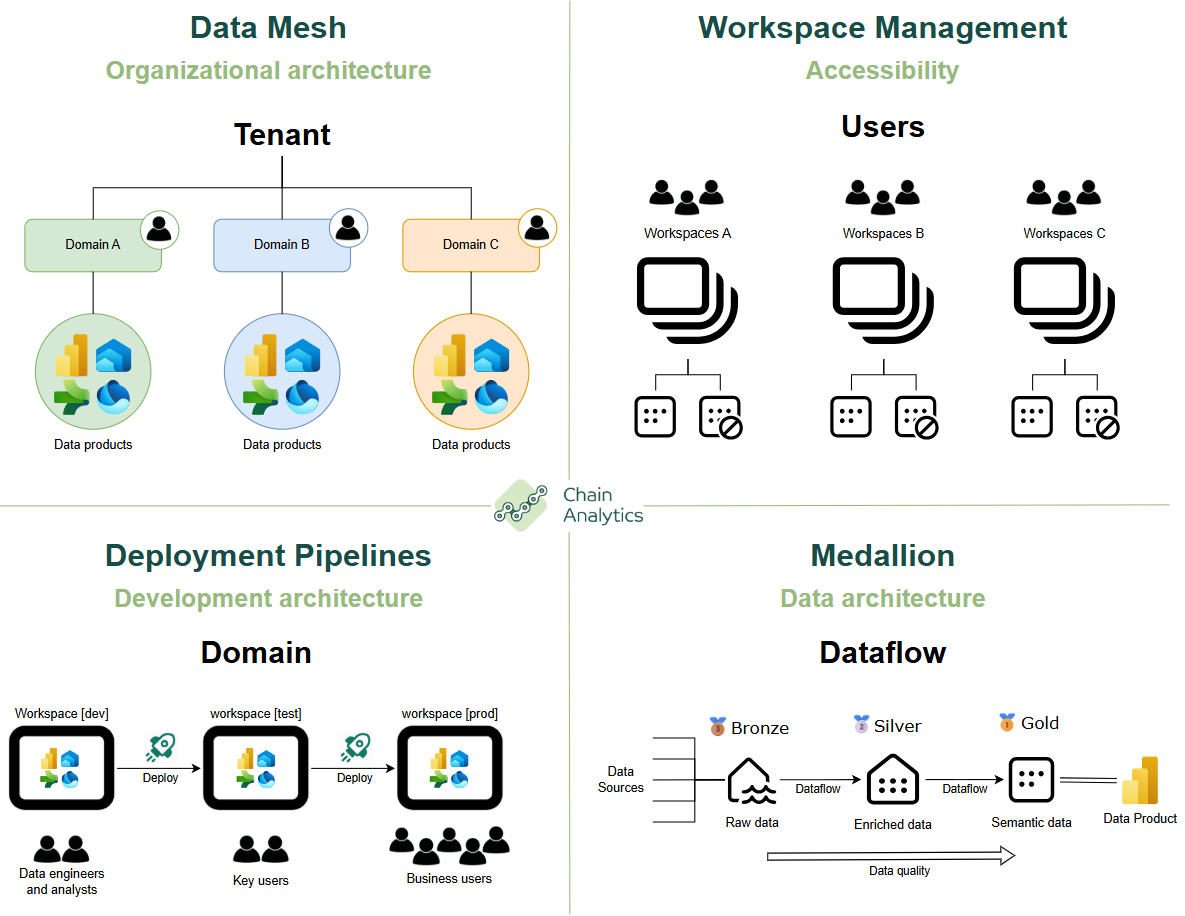
1. Data Mesh as Organizational Architecture
At Chain Analytics we are a fan of starting with the Data Mesh principles and especially the subject ownership. Instead of one central team managing all data, responsibility is distributed across business domains. Each domain owns its data products and ensures they meet quality and compliance standards. In Microsoft Fabric, this means organizing your tenant so that domains have clear boundaries and accountability.
When domains own their data, they can respond faster to business needs. Reports and insights are based on data that is managed by the people who understand it best. This reduces delays and improves trust and subsequently the quality in the information you use.
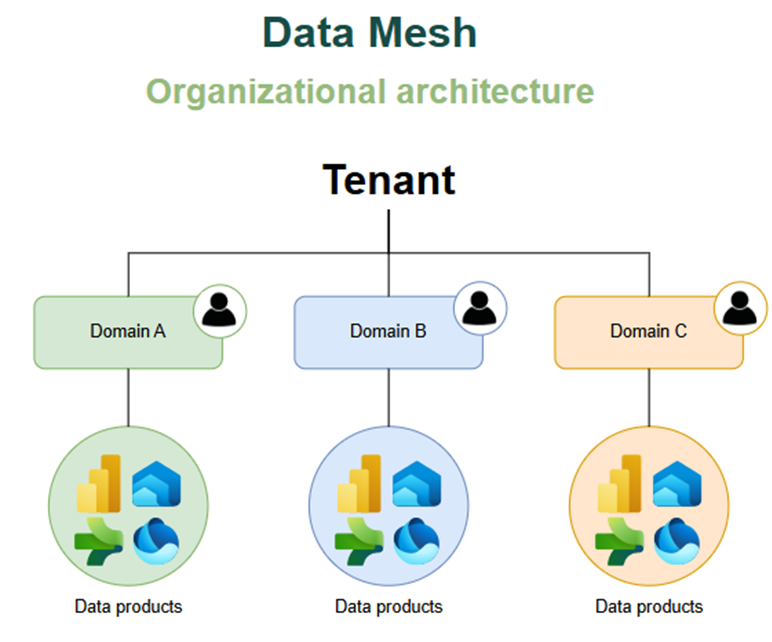
2. Workspace Management for Accessibility
Workspaces in Fabric control who can see and work with data(products). Good workspace management ensures that the right people have the right access. Here we tend to follow the principle of least privilege where you only see and get what you need.
Workspace management includes:
- Assigning roles based on responsibilities, such as Viewer or Contributor.
- Separating development, test, and production environments for users.
- Applying security policies for sensitive data.
Clear access rules protect confidential information and prevent mistakes. You can be confident that reports in production are accurate and approved.
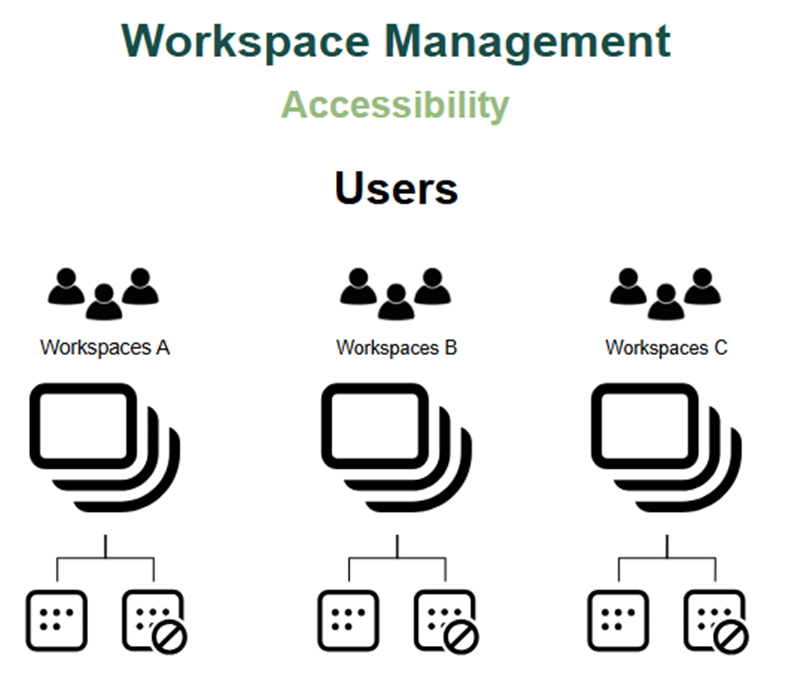
3. Deployment Pipelines as Development Architecture
Deployment pipelines move content from development to test and then to production in a controlled way. This process reduces risk and ensures consistency. In Fabric, pipelines should reflect your domain structure and workspace setup.
Three environments are crucial for maintaining a controlled development process:
- Data Engineers build and maintain datasets followed by analysts that create dashboards and reports. This all starts in the development environment
- Key Users and Data Stewards validate data and logic in the test environment.
- Business Users consume insights in the production environment.
Pipelines make sure that what you see in production has been tested and approved. This means fewer surprises and more confidence in the data behind your decisions. For the more larger and complex development environments, Fabric also provides a GIT integration.
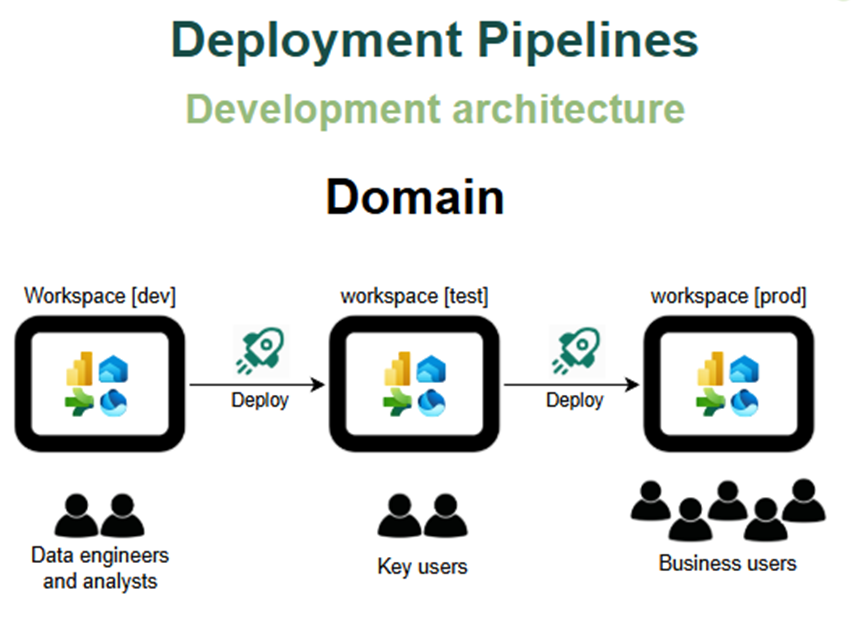
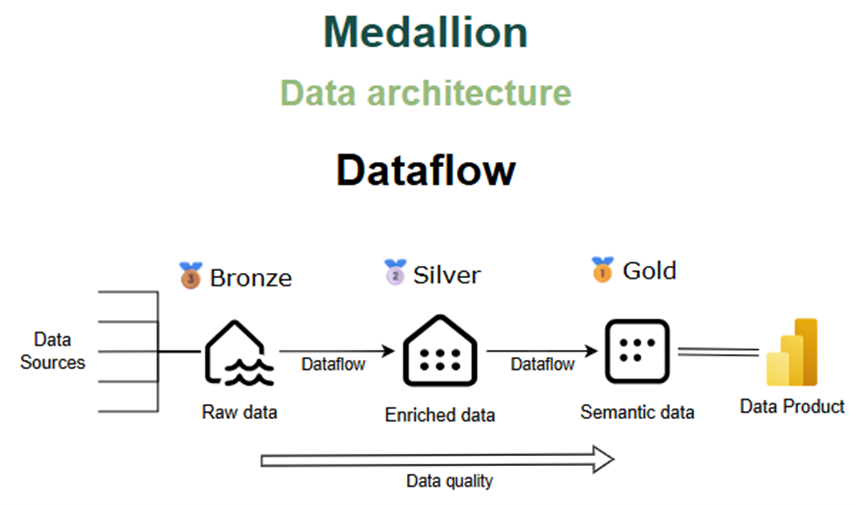
4. Medallion Architecture for Dataflows
The Medallion architecture organizes data into three layers:
- Bronze: Raw data from source systems.
- Silver: Cleaned and enriched data.
- Gold: Business-ready data for reporting.
Each layer improves quality and traceability. Bronze keeps the original source, Silver applies transformations, and Gold delivers trusted insights.
You know where your data comes from and how it has been prepared. Reports based on Gold data are reliable because they follow a clear process for quality.
Why a strong architecture drives better outcomes
A good architecture at the start does more than keep systems organized. It accelerates development, reduces risk, and ensures that analytics deliver real business value. When governance is built into your Microsoft Fabric environment from day one, teams can innovate without losing control. Clear ownership, secure access, controlled deployments, and structured data flows create trust in the numbers behind every decision.
At Chain Analytics, we help organizations implement these principles in a way that fits their goals. With the right foundation, your data becomes a strategic asset that supports growth, compliance, and outcome-driven decision making.
👍Like this blog on LinkedIn
Author: Maarten Bontes (Product Manager @Chain Analytics)
