

Your enabling partner in data-driven decision-making

Gallery

Contacts

info@chainanalytics.nl

+31 6 83 27 19 61

// The solution

Enterprise Data Model

The Enterprise Data Model turns a collection of separate data sources into one coherent picture of your business. It brings data together from several domains (finance, sales, supply chain and operations, etc.) in a single consistent structure: one source of truth that every report, dashboard and AI agent draws from.

Instead of starting from a blank page, you build on a proven model based on best practices, including ready-to-use reporting for each domain. The model is designed to be scalable, future-proof and AI-proof, so new sources, domains and use cases can be added without rebuilding what already works.
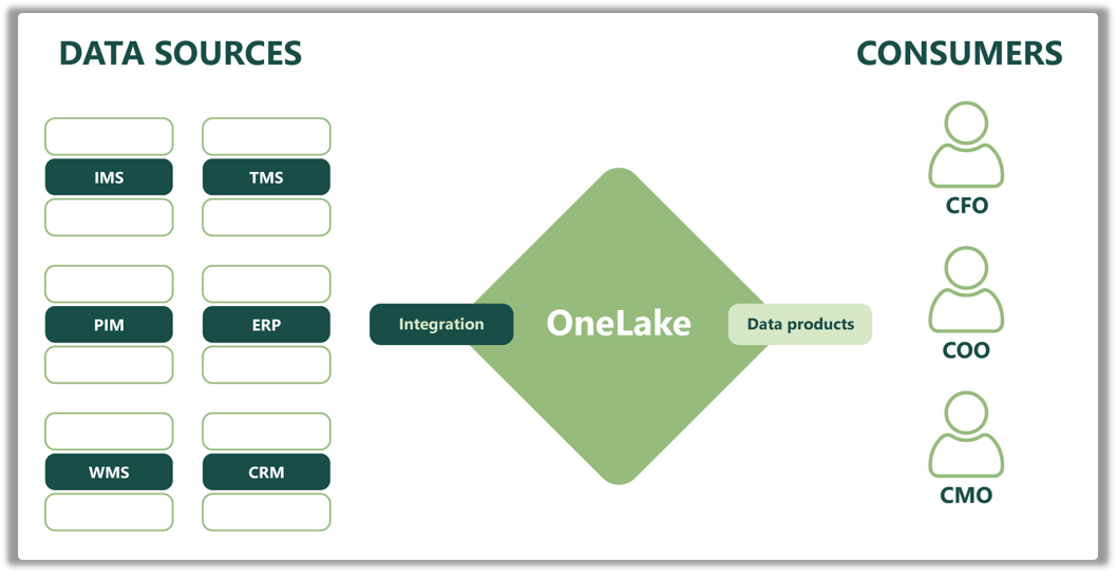
Data flow in OneLake showing connected data sources and delivery of data products to customers
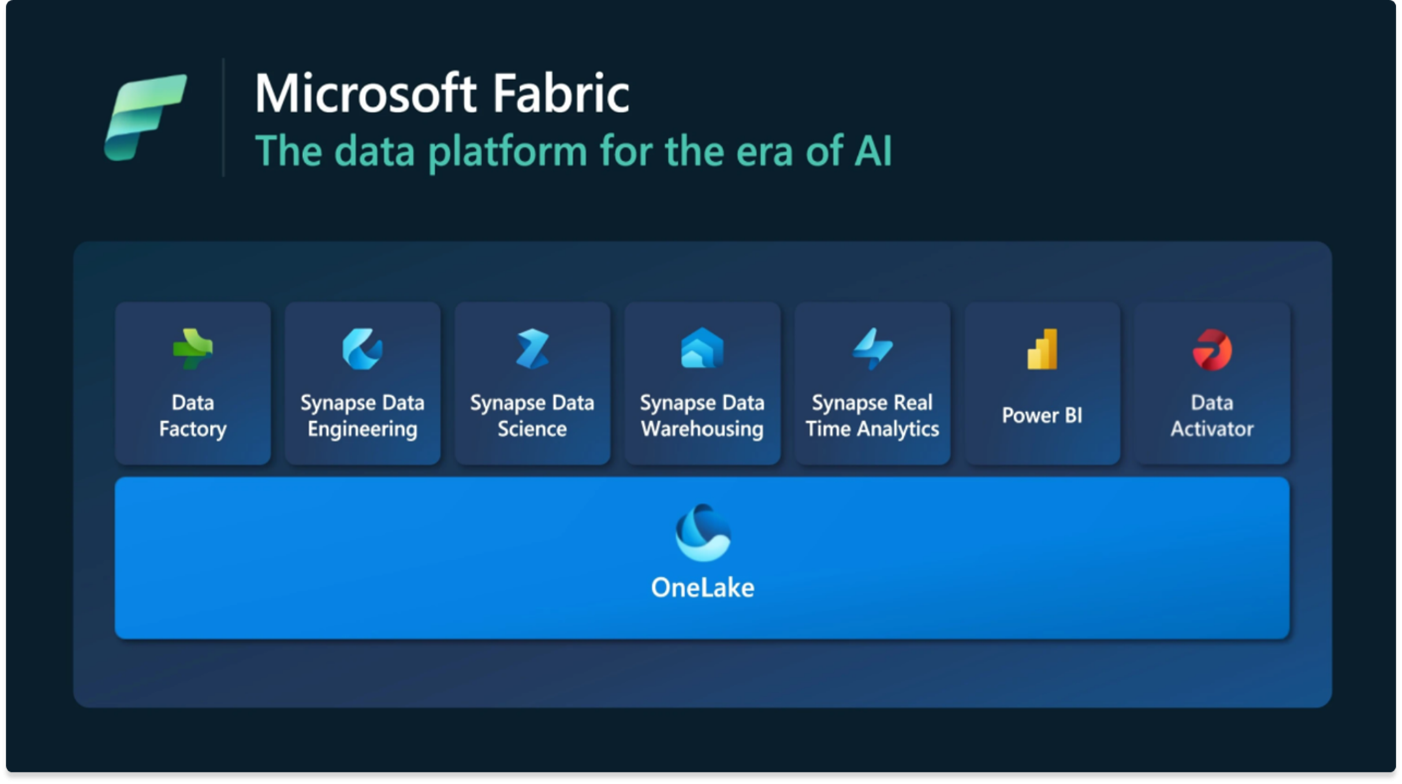
Microsoft Fabric unified data platform integrating Azure and Microsoft tools for streamlined data management and analytics
// The Platform

Microsoft Fabric

We build our Enterprise Data Model on Microsoft Fabric, using OneLake as the single foundation for all your data.

Microsoft Fabric is a unified data platform that integrates existing tools from across the Microsoft ecosystem, including Azure, to streamline data management and analytics. By bringing together services like OneLake and Power BI, Fabric enables seamless collaboration between data engineers, data analysts, and data scientists, all within the same platform. This integration simplifies workflows, accelerates decision-making, and allows teams to work more efficiently on data projects without switching between different tools. 

// Data Governance

Data Mesh

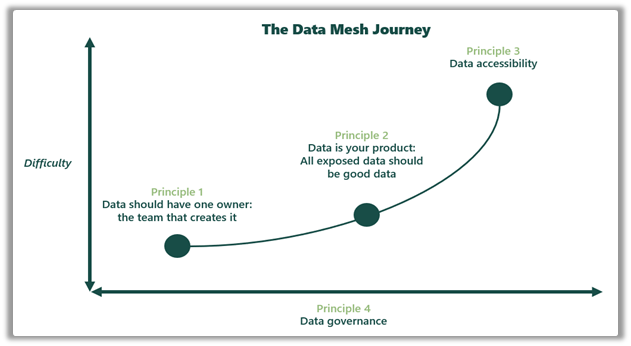
Data Mesh offers a decentralised answer to a problem many organisations recognise: traditional governance struggles to keep pace with a modern data landscape. We don’t treat it as an all-or-nothing model, but as a way of thinking that sits behind every implementation we do.

Three principles in particular guide our work: ownership belongs with the domain teams that know the data best, every dataset is treated as a product with a clear owner and quality standard, and accessibility is arranged deliberately so the right people can find and use the data they need.

Applied pragmatically, these principles close the gap between control and innovation and raise data governance maturity faster than any top-down framework. Our vision on data governance and Data Mesh can be found here

Data Mesh journey