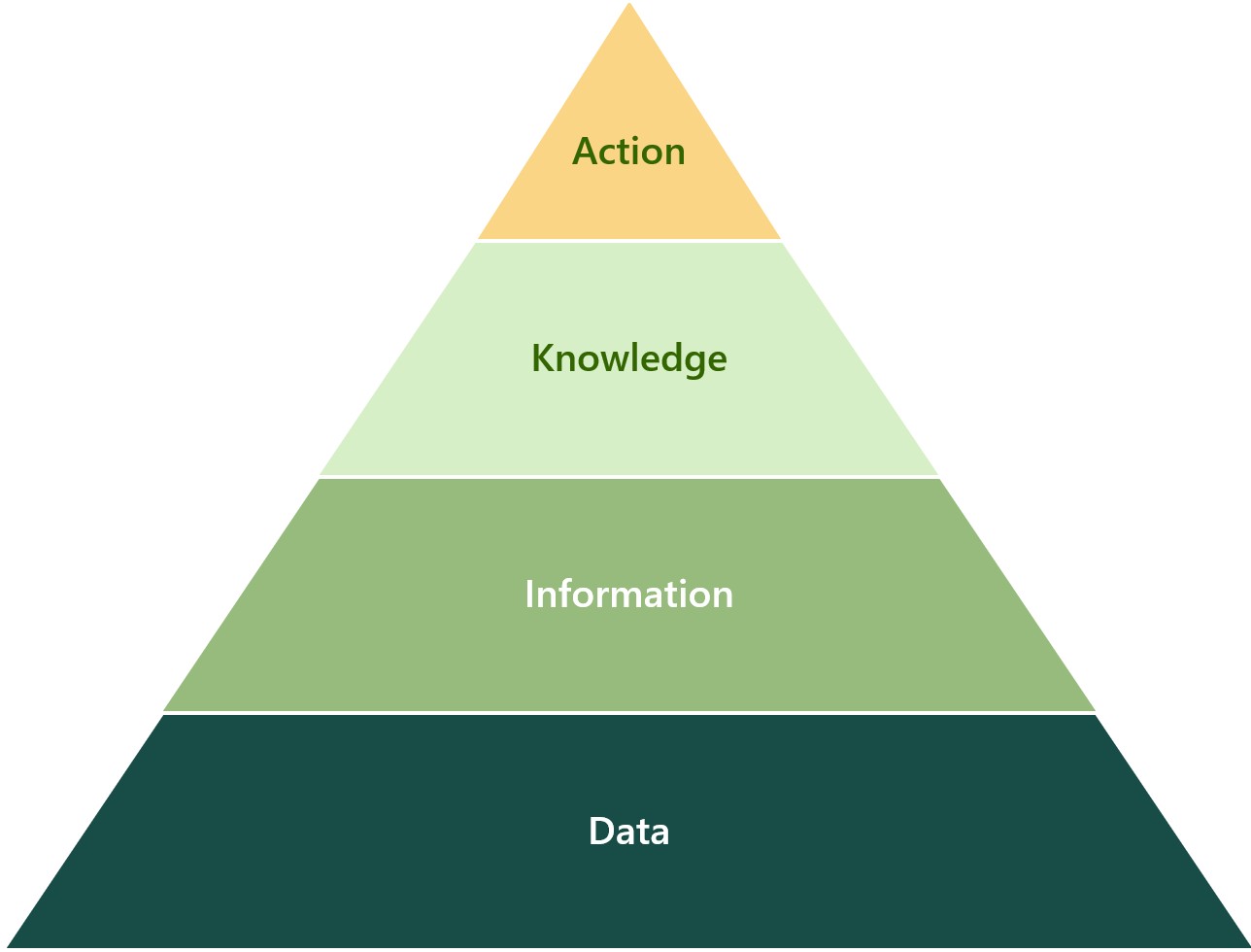




Decision Intelligence turns your Enterprise Data Model into answers, not just dashboards. Copilot and Fabric Data Agents let people ask direct questions in natural language, while every answer stays traceable to the same governed model that powers your reports.
Decision Intelligence
- Home
- Decision Intelligence
// AI driven
Copilot integration
No more time lost on ad-hoc analysis: stitching Excel files together, rebuilding the same pivot table for the third time, or waiting two days on the BI team for a number you need in this afternoon’s meeting. Copilot removes that detour. Users ask their question in plain language and get an answer straight away.
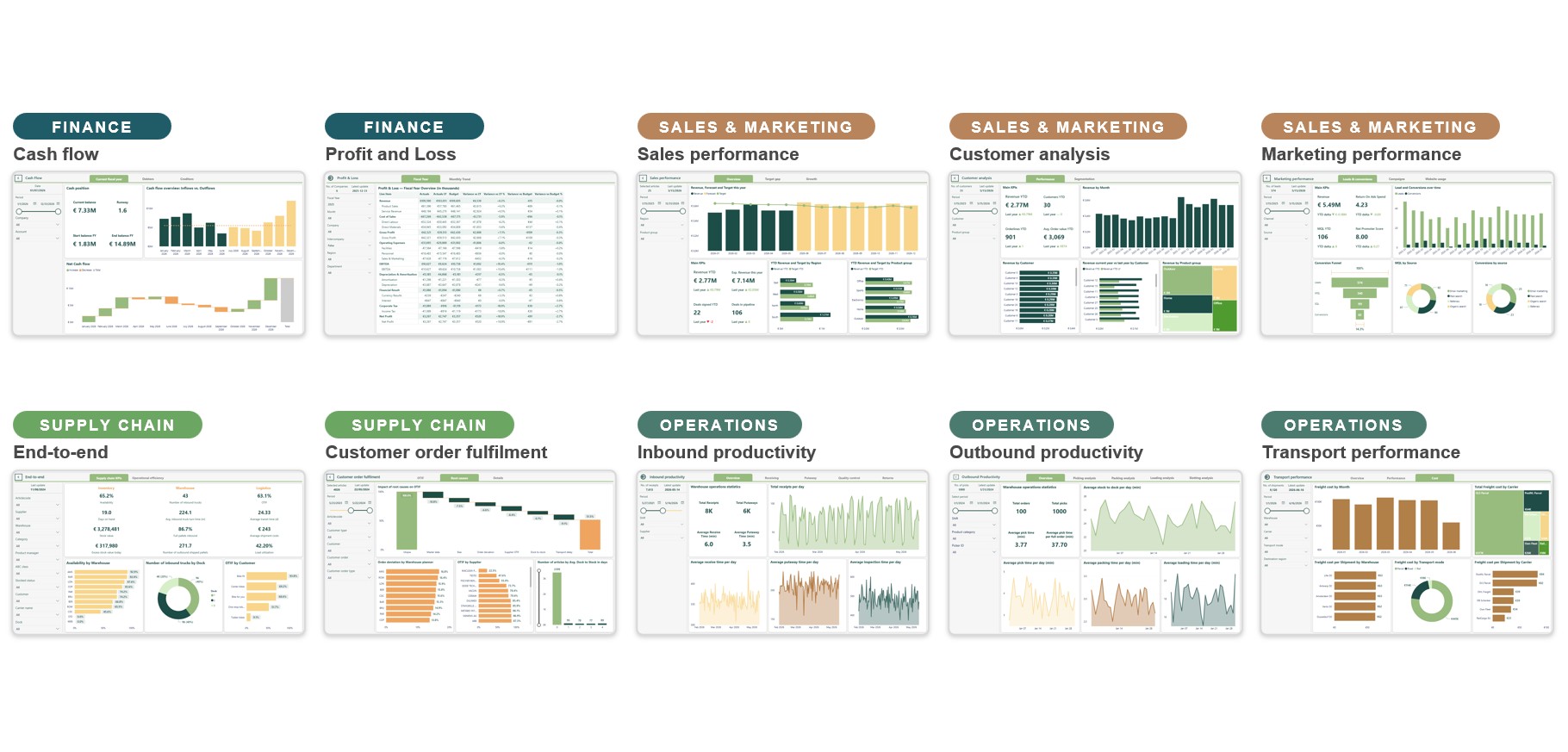
What makes this work is not the AI, it’s what sits underneath. Copilot connects directly to the Enterprise Data Model, so it answers from the same definitions and the same source of truth as your reporting, instead of guessing its way through raw tables.
Instead of exporting to Excel or waiting on a BI team for an ad-hoc pull, a sales lead can ask what changed in regional margin this month and get an answer grounded in the same definitions used across the business. Copilot does not guess. It queries the Enterprise Data Model directly, so the answer matches what a dashboard built on the same model would show.
// One step ahead
Fabric Data Agent
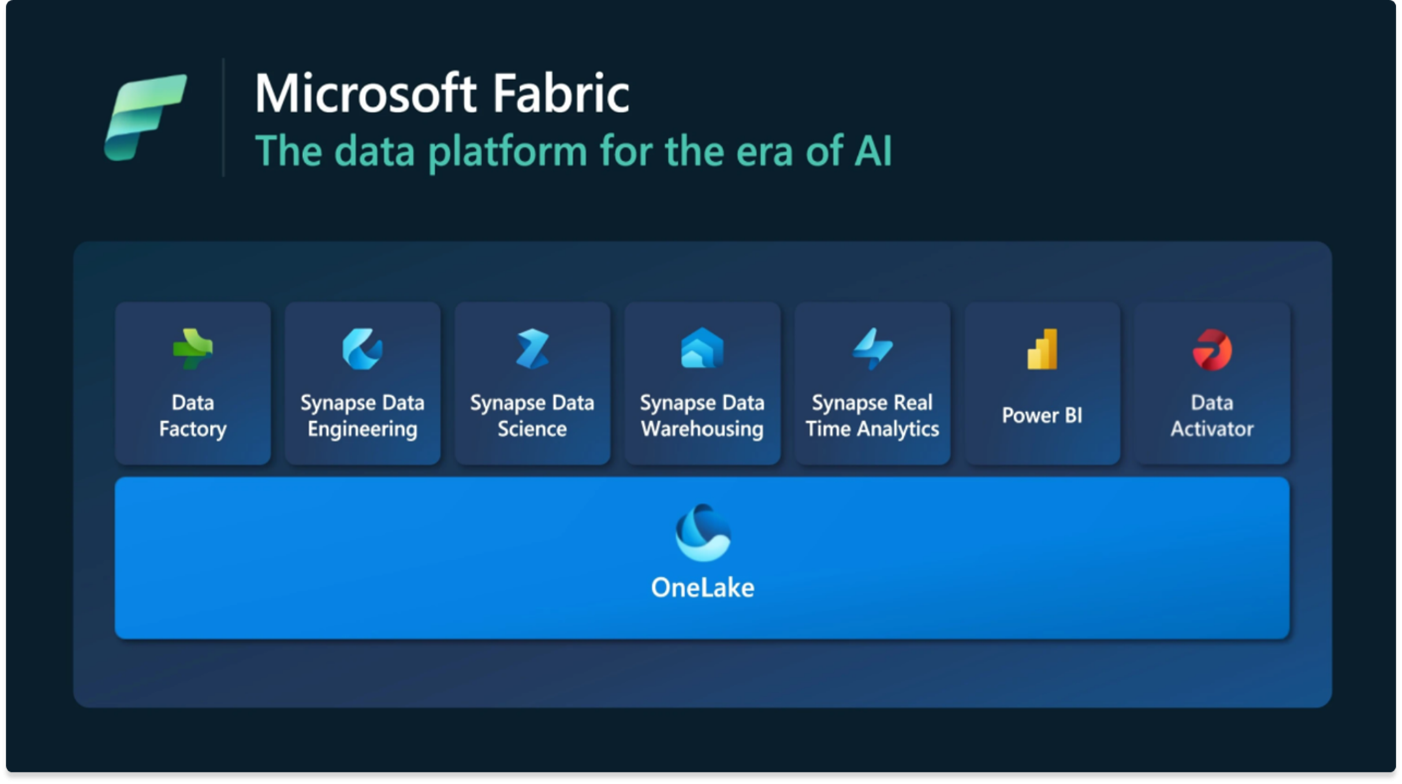
A data agent is only as good as its instructions. In Fabric we configure agents on your own data model and business logic: which tables to use, how a metric is defined, which filters apply, and where the boundaries of a reliable answer lie.
This is where agents go a step further than a single Copilot question. An agent can combine several domains in one analysis, so a question like “why did delivery reliability drop for our largest customers last quarter” is answered across sales, supply chain and operations at once, following the same route an analyst would take. And because the instruction is saved and reused, the same question next month is answered in exactly the same way.
The result is an answer you can act on rather than one you have to verify. Well-instructed agents on a solid data foundation give the right answer, with the reasoning traceable back to the model. That is exactly what makes AI usable in a business context instead of in a demo.
Each agent is configured with instructions that define which tables it can query, how key metrics are calculated, and where its answers should stop. That means a Finance agent and a Supply Chain agent can share the same underlying model while staying within their own domain, and a cross-domain question can draw on both without duplicating logic. No team ends up maintaining its own copy of the truth.
// From data to action
Data-driven decision-making
Technology only pays off when decisions actually change. That is why we look beyond the dashboard: who makes this decision, at what moment, with what information, and what stops them from acting on it today.
From there we build the business case and improve the decision process itself, making the insight available at the moment it is needed, with clear ownership and a clear next step. Reporting becomes part of the way of working instead of something people check afterwards.
And because every data product starts from a defined outcome, its effect is measurable. You can see which decisions have improved and what that is worth, which makes the next step in your data journey easy to justify.
A recommendation is only useful if someone owns the decision it informs and acts on it in time. We design each Decision Intelligence use case around a named decision, a deadline, and a way to measure whether the outcome actually improved. Curious what that looks like for your organisation? Get in touch to talk through a first use case.